Sennett, Richard
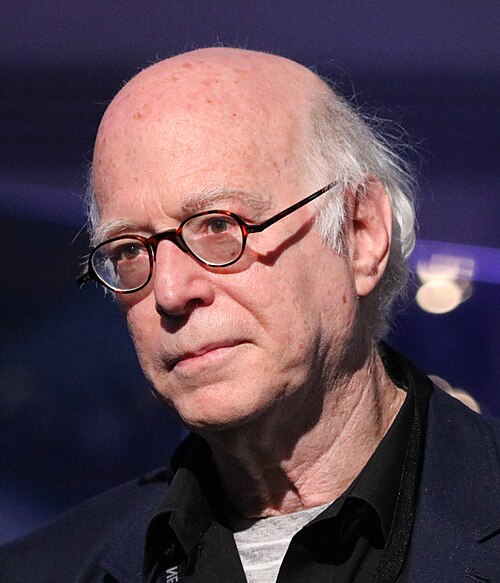
Bio: (1943-) American sociologist. He studied at Harvard and lectured at New York University, where he founded and directed the New York Institute of the Humanities. Currently, he teaches at the London School of Economics.
In The Fall of Public Man (1974), Sennett argues that the decline of formal public behaviour has led to a loss of civility and weakened public life. He suggests that shallow displays of friendliness between strangers reflect superficial public relationships. The growing separation of private and public spheres has allowed personal values to dominate public roles, so that politicians are judged more on personality than on their ability to govern. According to Sennett, modern visual media, especially television, reinforce this focus on self-presentation, undermining effective political life and contributing to the decline of the dedicated public official.
His main focus is on how changing the nature of capitalism influences work and careers, urban areas, and individual human emotions, expectations, and goals. In the books The Hidden Injuries of Class (1972), Authority (1980), The Corrosion of Character (1998), and Respect (2003), he examines how changes in work and career lead to alienation. In The Corrosion of Character, he argues that modern forms of work, shaped by automation and flexibility, undermine workers’ autonomy, stability, and character. He shows how automation in a bakery reduced workers to button-pushers with little skill, responsibility, or control, leaving them powerless when systems failed. More broadly, technological change has created a divided workforce: a small group of highly skilled, autonomous professionals and a much larger group of workers with little autonomy. Sennett contrasts this with the life of Enrico, a janitor whose secure, unionized job provided dignity, stability, and a clear long-term purpose centered on supporting his family. Enrico’s son Rico achieved upward mobility and financial success in a flexible, mobile career, but at the cost of insecurity, weak community ties, constant pressure, and anxiety about family life and values. Sennett concludes that while flexible work can bring success, it erodes loyalty, long-term goals, trust, and purpose, creating tension between the demands of modern work and the foundations of strong character.
Sennett’s books, Families against the City (1970), The Uses of Disorder (1973), The Conscience of the Eye (1990), Flesh and Stone (1994), and Building and Dwelling: Ethics for the City (2018) are dedicated to urban sociology. In The Conscience of the Eye (1993), Sennett argues that urban planners should aim to create a “humane city” that encourages social interaction rather than isolation. He criticizes large, impersonal buildings, traffic highways, and suburban shopping malls for turning people inward and disconnecting them from one another. Instead, he advocates for lively, human-scaled city streets that promote contact among diverse cultures, taking inspiration from older urban areas, such as Italian city centers, which successfully combine diversity with elegant, people-focused design.
Fields of research
Capitalism City Civilization Classes Family History Inequality, Social Media Morality Politics Professions Trust Work Working ClassMain works
Nineteenth Century Cities: Essays in the New Urban History (1969);
Classic Essays on the Culture of Cities (1969);
Families against the City (1970);
The Hidden Injuries of Class (1972);
The Uses of Disorder (1973);
The Fall of Public Man (1974);
Authority (1980);
The Conscience of the Eye: The design and social life of cities (1990);
Flesh and Stone: The Body and the City In Western Civilization (1994);
The Corrosion of Character. The Personal Consequences of Work in the New Capitalism (1998);
Respect. The Formation of Character in an Age of Inequality (2003);
The Culture of the New Capitalism (2006);
The Craftsman (2008);
The Foreigner: Two Essays on Exile (2011);
Together: The Rituals, Pleasures, and Politics of Cooperation (2012);
Building and Dwelling: Ethics for the City (2018);
The Quito Papers and the New Urban Agenda (2018);
The Performer: Art, Life, Politics (2024).