Bendix, Reinhard
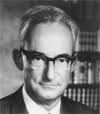
Bio: (1916–1991) German-American sociologist. Reinhard Bendix emigrated to the United States in 1938, enrolled at the University of Chicago, where he finished his undergraduate and graduate studies. He taught at the University of Chicago from 1943 to 1946, and then, following one year at the University of Colorado, moved to Berkeley, where he stayed until his retirement. Bendix was elected the President of the American Sociological Association in 1969.
Bendix made substantial contributions to historical and comparative sociology, the sociology of politics and political science, the study of social stratification and class, and to the popularization of Max Weber’s sociology in the USA. Bendix’s first book, Higher Civil Servants in American Society (1949), which was based on his dissertation, studied the social origins of American public officials.
Bendix’s first book dealing with historical and comparative sociology was Work and Authority in Industry (1956). In it, he researched the historical development of the role of bureaucracy and ideological justification for the authority of managers in the United States, Great Britain, the Soviet Union, and East Germany, during their periods of industrialization.
In Nation Building and Citizenship (1964), Bendix studies the development of state institutions before and after the industrial revolution in the Western world, but also in non-Western societies of Japan and India. This work makes contributions to the sociology of modernization, especially with criticism of the standard view of modernization, i.e., that it only starts with the Industrial Revolution.
Bendix explores the historical development of authority, power structures, and legitimacy in Western and non-Western societies in Kings and People (1978). In premodern societies, power rested on status inequality, while in modern times nation-state has to have democratic legitimacy, and organizations have to employ managerial ideology to project authority. In different society specific cultural traditions and historical circumstances lead to different expressions of state and managerial authority and legitimacy
Bendix’s book Max Weber: An Intellectual Portrait (1960) presents Max Weber’s most substantive theoretical contributions, although in an alternative reading to the then predominant interpretation offered by Talcott Parsons. Bendix appraises Weber for his historical-comparative studies of politics and religions, while disregarding his methodology.
In the books Class, Status and Power: Social Stratification in Comparative Perspective (1953) and Social Mobility in Industrial Society (1959), both co-authored by Bendix and Seymour Martin Lipset, the authors present the results of comparative studies of class and mobility in multiple countries. Analyzing intergenerational mobility between father and son in the USA, Japan, Denmark, Germany, France, Great Britain, Italy, Sweden, and Switzerland, the authors concluded that mobility between manual and non-manual occupations (in both directions) in all countries is about 30 percent. They believe that similar percentages of mobility do not automatically mean the existence of "equal opportunities" in all of these countries. They also concluded that the real chances for upward mobility in the United States are less than the social perception of those chances.
Main works
Higher Civil Servants in American Society (1949);
Social Science and the Distrust of Reason (1951);
Class, Status and Power (1953);
Work and Authority in Industry (1956);
Social Mobility in Industrial Society (1959);
Max Weber: An Intellectual Portrait (1960);
Nation Building and Citizenship (1964);
Scholarship and Partisanship: Essays on Max Weber (1971);
Kings and People: Power and the Mandate to Rule (1978);
Force, Fate, and Freedom: On Historical Sociology (1984);
Embattled Reason, 2 vols. (1988–9);
From Berlin to Berkeley (1986);
Unsettled Affinities (1993).