Lukes, Steven
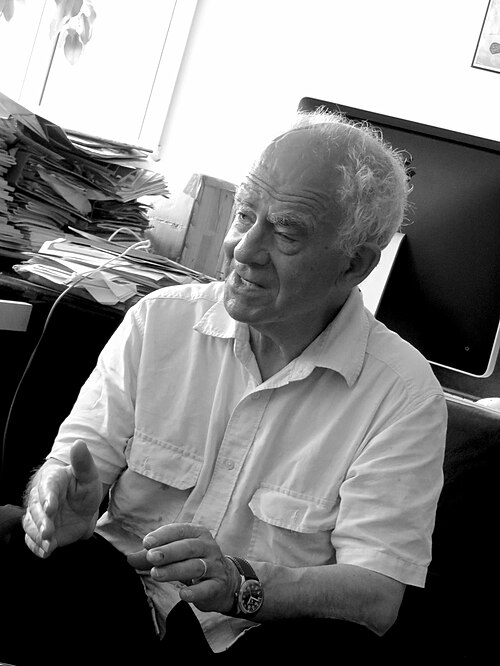
Bio: (1941-) British sociologist. Steven Lukes has lectured at the University of Siena, the London School of Economics, Balliol College at Oxford University, European University Institute, Florence, and is currently a professor at New York University. His doctoral thesis explored the work of Emile Durkheim and was the basis of his book Emile Durkheim: His Life and Work. A Historical and Critical Study (1972).
Lukes, in his works, usually tries to connect philosophy and the social sciences. In his book Individualism (1973), he explores how the concept of “individualism” has been understood across different national traditions and intellectual contexts, breaking it down into its core ideas and doctrines. He argues that, in its contemporary form, individualism serves a harmful ideological function: it presents a seemingly unified but actually constructed set of ideas that is used to claim that redistributive policies are impractical or undesirable, and to deny the possibility of alternatives to a market-based system. Lukes has also, in his books and articles, explored topics such as rationality, moral philosophy, and the sociology of morality, political and social theory, the relationship between Marxism and ethics, the category of the person, and the history of ideas.
Lukes is most famous for his well-known and influential book Power: A Radical View (1974). In it, Lukes presents his theory of the three faces (dimensions) of power. The first dimension of power is the most observable and direct, and it refers to power in the decision-making processes. In this aspect, power is situated with actors (individual or collective) who are able to dominate in the decision-making process, especially in situations where there is a clear conflict of interests between different actors. The second face of power is “the power of nondecision making”. Nondecision-making power lies with actors who have control over which issues are allowed to be debated and decided over and which are prevented from being discussed or decided over. The third dimension of power refers to the ability of actors to shape others' desires, wishes, and goals through manipulation, propaganda, ideology, etc. This dimension of power is hardest to directly observe and measure. Lukes, taking into account all three faces of power, defines power as: “A exercises power over B when A affects B in a manner contrary to B’s interests.”
Fields of research
Conflict Ideology Individualism Law Liberalism Morality Politics Power, Political Rationality StateTheoretical approaches
Durkheimian SchoolMain works
The Good Society: A Book of Readings (1971);
Emile Durkheim: His Life and Work. A Historical and Critical Study (1972);
Individualism (1973);
Power: a Radical View (1974);
Essays in Social Theory (1977);
Rationality and Relativism (1982);
Durkheim and the Law (1983);
Marxism and Morality (1985);
The Power of the Powerless: Citizens against the State in Central-Eastern Europe (1985);
The Category of the Person: Anthropology, Philosophy, History (1986);
Power (1986);
Moral Conflict and Politics (1991);
Multicultural Citizenship (1999);
Liberals and Cannibals: The Implications of Diversity (2003);
Moral Relativism (2008);
The Diversity of Morals (2025).