Glazer, Nathan
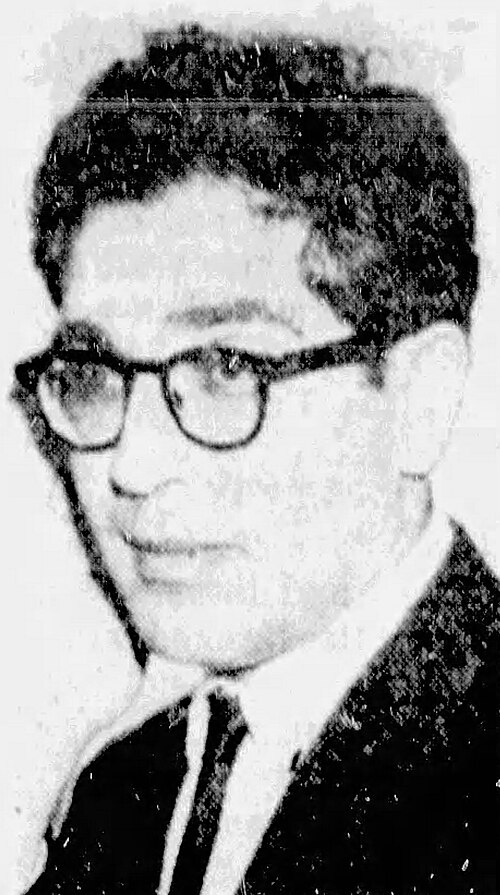
Bio: (1924–2019) American sociologist. Glazer studied at the City College of New York and lectured at the University of California, Berkeley, and Harvard University. He was co-editor of the journal The Public Interest.
In his youth, he was a supporter of Marxism, but thorough out years he adopted conservative ideas and values. He collaborated with David Riesman on the very influential book The Lonely Crowd (1950). In the book, Riesman and Glazer explore the history of the development of the social character. They concluded that throughout history, three different social characters have developed: 1) „tradition directed“, 2) „inner directed“, and 3) „other directed“.
In the 1950s, 1960s, and 1970s, Glazer mostly studied the social position of Jews and African-Americans in the US, evident in books such as American Judaism (1957), Affirmative Discrimination (1975), Ethnic Dilemmas 1964–1982 (1983), and in two books coauthored with Patrick Moynihan, Beyond the Melting Pot (1963) and Ethnicity. Theory and Practice (1975).
In Beyond the Melting Pot, Nathan Glazer contended that the severe legacy of slavery left Black Americans at a profound disadvantage, preventing them from achieving the same upward mobility that many other immigrant and ethnic groups associated with the American Dream. He maintained that addressing this deep-rooted historical injustice lay largely beyond the reach of contemporary social policy. Glazer further argued that, even after the Civil Rights Movement, significant disparities between Black and white Americans endured, reflected in struggling inner-city schools and what he saw as the weakening of the Black family.
In Affirmative Discrimination (1975), Glazer raised moral concerns about affirmative action programs, questioning their fairness and broader implications. In later works, including We Are All Multiculturalists Now (1997) and Sovereignty under Challenge (co-edited with J. D. Montgomery in 2002), he criticized liberal educational reforms, particularly multicultural curricula. He argued that such approaches risked distorting historical truth and weakening national cohesion by contributing to what he described as the “Balkanization” of the United States.
Fields of research
Character, Social City Conservative Ideology Discrimination Education Ethnicity History Human Rights Multiculturalism Poverty Power, Political Protests Slavery Social Policy Socialism SegregationTheoretical approaches
Conservatism, SocialMain works
The Lonely Crowd (1950);
American Judaism (1957);
The Social Basis of American Communism (1961);
Beyond the Melting Pot (1963);
Negroes & Jews: The New Challenge to Pluralism (1964);
Remembering the Answers: Essays on the American Student Revolt (1970);
The Poor: A Culture of Poverty: Or A Poverty of Culture? (1971);
Ethnicity. Theory and Practice (1975);
Affirmative Discrimination (1975);
Ethnic Dilemmas 1964–1982 (1983);
The Urban Predicament (1976);
Civil Rights, Land Policy and the Cities: A Perspective on the Eighties (1979);
Dimensions of Ethnicity: Prejudice (1982);
Ethnic Groups in History (1983);
Conflicting Images: India and the United Textbooks, States (2008);
We Are All Multiculturalists Now (1997);
Sovereignty Under Challenge: How Governments Respond (2002);
From a Cause to a Style: Modernist Architecture's Encounter with the American City (2007);
The National Mall: Rethinking Washington’s Monumental Core (2008).