Davy, Georges
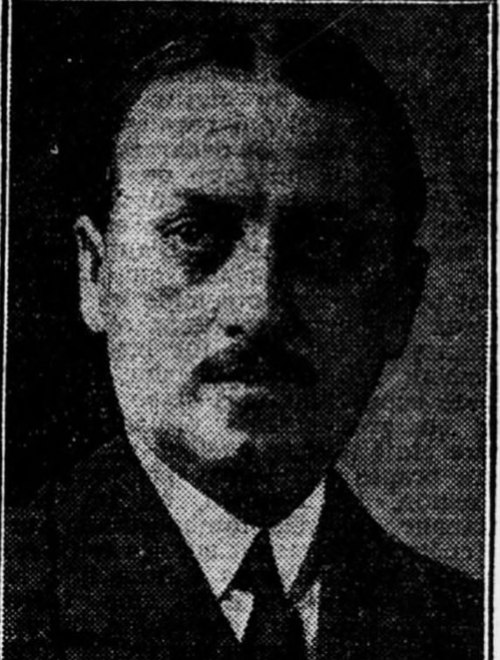
Bio: (1883-1976) French sociologist. Georges Davy studied philosophy at École Normale Supérieure and lectured at the University of Dijon, the Rennes Academy, and the Sorbonne. He was a member of the Durkheimian school of sociology and contributed to its journal, L’Année Sociologique.
Davy contributed to the areas of sociology of law, especially contracts and social obligations. Influenced by Durkheim’s emphasis on collective life, he explored how social bonds are maintained not only through formal agreements but also through shared moral expectations. His research often focused on the idea that contracts are not purely individual or economic arrangements; rather, they are rooted in broader social norms and collective values that give them meaning and force.
One of his most important contributions is his analysis of the relationship between individual freedom and social constraint. Davy argued that modern societies, while emphasizing individual rights, still depend on underlying systems of obligation that bind people together. In this sense, he extended Durkheim’s concern with social solidarity, showing how even seemingly voluntary interactions are shaped by collective pressures and ethical frameworks.
Davy was also engaged in the study of legal and moral institutions, examining how they evolve over time and reflect the needs of society. His work helped bridge sociology and legal theory, highlighting the importance of understanding law not just as a set of rules, but as a social phenomenon embedded in culture and history.
Theoretical approaches
Durkheimian SchoolMain works
Émile Durkheim: choix de textes avec étude du système sociologique (1911);
Le droit, l'idéalisme et l'expérience (1922);
La foi jurée: étude sociologique du problème du contrat: la formation du lien contractuel (1922);
Des clans aux empires; l'organisation sociale chez les primitifs et dans l'Orient ancien, 1923
Éléments de sociologie (1929);
Sociologues d'hier et d'aujourd'hui (1931);
Thomas Hobbes et J.J. Rousseau (1953);
L'homme; le fait social et le fait politique (1973).