Chapin, F. Stuart
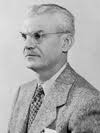
Bio: (1888-1974) American sociologist. Stuart Chapin got his MA and P.Hd in sociology from Columbia University. He taught at Wellesley College, Smith College, and the University of Minnesota. Chapin served as the 25th President of the American Sociological Association and was the editor-in-chief of the journal Social Science Abstracts.
Chapin aimed to bring the rigor of the natural sciences into sociology by combining scientific methods with statistical techniques. His broader goal was not only to strengthen sociology as a discipline but also to use it as a tool to help prevent recurring social problems. Early in his career, he explored the social and biological evolution of humans and proposed a theory describing cyclical changes in nonmaterial culture over time.
Chapin made major contributions to the measurement of social status. In his 1933 work The Measurement of Social Status, he introduced the Chapin Social Status Scale, which sought to objectively assess socioeconomic status by examining observable features of people’s living environments. These included household items, consumption patterns, and aspects of living room conditions such as cleanliness, furnishings, and overall organization. He later developed the Chapin Social Participation Scale (1937), which connected an individual’s social status to their involvement in voluntary organizations.
In Contemporary American Institutions (1935), Chapin further developed his theory of institutions, aiming to ground it more firmly in empirical research. He highlighted tensions within institutions, particularly conflicts between professional roles and organizational expectations, as well as the distinction between latent and manifest functions. In the 1940s and 1950s, he expanded his work by integrating systematic procedures for conducting experimental research in real-world, field-based settings.
Fields of research
Civil Society Classes Community Consumerism Evolution Institution and Organization Leaders StatusMain works
ield Work and Social Research (1920);
An introduction to the study of social evolution, the prehistoric period (1923);
Cultural Change (1928);
The Measurement of Social Status by the Use of the Social Status Scale (1933);
Contemporary American Institutions (1935);
Social Participation Scale (1937);
Community Leadership and Opinion in Red Wing (1945);
Experimental Designs in Social Research (1947).