Barnard, Chester I.
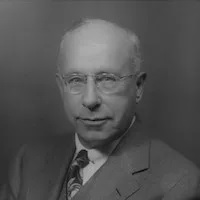
Bio: (1886–1961) American industrialist and management theorist. Chester Barnard studied at Harvard College and spent most of his career working for the Bell Telephone Company. Aldow didn’t have an academic career; nevertheless, he left a major influence on sociology, psychology, and management science. Barnard used his experience of working and managing a large company to make generalizations regarding institutions and their internal dynamics.
In The Functions of the Executive (1938), Barnard presents organizations as cooperative systems that survive only if they achieve two goals: fulfilling their objectives (effectiveness) and maintaining the willingness of individuals to contribute (efficiency). These systems depend on three key elements: a shared organizational purpose, individual motivations that must be satisfied, and communication processes that balance these two.
Barnard redefines the role of executives as creating organizational purpose, maintaining cooperation through a fair balance of contributions and rewards (organizational equilibrium), and ensuring effective communication. He views organizations as networks of participants—such as employees, managers, customers, and suppliers—who engage in mutually beneficial exchanges.
A major theme in his work is the gap between practical understanding and theoretical explanation. Executives often act with an intuitive grasp of organizational realities but fail to recognize or explain them formally. For example, Barnard emphasizes the importance of informal organization, which naturally develops alongside formal structures and plays a crucial role in communication, cohesion, and protecting individuals. Although managers rely on it in practice, they often deny its significance in theory.
Barnard also offers a key insight into authority, arguing that it does not reside in the person giving orders but in the person receiving them. Orders are only effective if they are understood, accepted as consistent with organizational goals, and feasible to carry out. While skilled leaders intuitively understand this, they often overestimate their own authority and overlook how frequently their directives are ignored.
Fields of research
Authority Communication Cooperation Institution and Organization Leaders Management MotivationMain works
The Function of the Executive (1938);
Organization and Management (1948).