Gehlen, Arnold
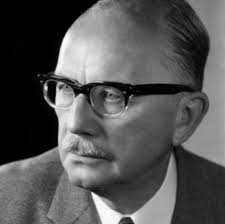
Bio: (1904–1976) German philosopher, anthropologist, and sociologist. Arnold Gehlen was a member of the 'Leipzig School', founded by Hans Freyer. Gehlen taught at the University of Frankfurt, the University of Königsberg, the University of Vienna, and Aachen University. He joined the Nazi party in 1933, and his book Der Idealismus und die Gegenwart (1935) was dedicated to creating a “National Socialist philosophy”.
Gehlen’s most famous and influential book is Man: His Nature and Place in this World (1940). In this work, he combines ideas of Max Scheler and Friedrich Nietzsche with Georg Herbert Mead’s theory of the social constitution of the ego, to pruduce novel approach in philosophical anthropology. In Gehlen’s view, humans are “not yet finished animals”, as they lack sufficient instincts to function by themselves and are dependent on culture and society to shape them during the period of maturation. This ontological frailty and existential precariousness imply that in the modern world, humans need institutions to provide them with discipline. Institutions stabilize tensions and create lasting motivations. Because it is hard to establish institutions and it is easy to destroy them, any emancipatory effort carries a lot of risk. On the other hand, man does not only follow rules established by institutions, but also uses language to become an ‘active being’ that uses action to constantly reproduce its world.
Fields of research
Actors Anthropology Art Instincts Institution and Organization Language Motivation Socialization TechnologyTheoretical approaches
Leipzig SchoolMain works
Der Idealismus und die Gegenwart (1935);
Man: His Nature and Place in the World (1940);
Urmensch und Spätkultur. Philosophische Ergebnisse und Aussagen (1956);
Man in the Age of Technology (1957);
Zeit-Bilder (1960);
Moral und Hypermoral. Eine pluralistische Ethik (1969);
Gesamtausgabe, K.-S. Rehberg (ed.), 10 vols. (1978–2004).