Ellul, Jacques
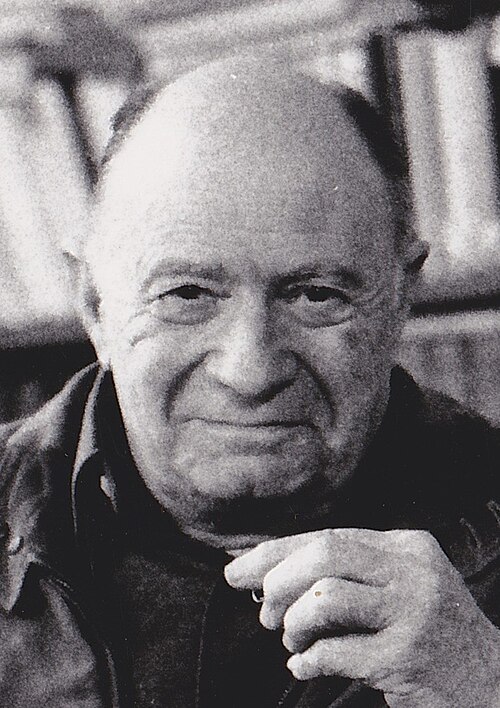
Bio: (1912-1994) French sociologist, philosopher, lay theologian, and jurist. Jacques Ellul studied law at the universities of Bordeaux and Paris, and lectured at several universities: Montpellier, Strasbourg, Clermont-Ferrand, and the University of Bordeaux.
Ellul’s ideas were shaped under the influence of Karl Marx, anarchism, Karl Barth, and Emmanuel Mounier. Ellul made important contributions across many fields, but is best known for The Technological Society (1954), where he developed the concept of “technique.” By this, he meant not just machines or technology, but the total system of rational, efficiency-driven methods that increasingly dominate all areas of life.
Ellul argued that in modern society, especially after World War II, technique has become the central organizing force, shaping everything from politics and the economy to education, religion, and personal life. Humans no longer live primarily in a natural world, but in an artificial one created by technical systems. As a result, problems caused by technological advancement are also approached only with technical solutions, and efficiency becomes the main value—blurring the distinction between means and ends.
He also examined the role of the modern state, describing it as both highly powerful and fundamentally limited. It is powerful because it uses advanced administrative systems and propaganda, but impotent because it cannot act outside the logic of technique. According to Ellul, political change—whether through elections or revolutions—rarely leads to real transformation, as systems remain governed by the same technical principles.
Although critical of the state and sympathetic to anarchist ideas, Ellul rejected violence and instead advocated a form of resistance based on rejecting power and building small, alternative communities focused on cooperation and mutual aid. He believed true change requires a moral and social transformation rather than reliance on political systems or technological solutions.
Main works
The Theological Foundation of Law (1946);
Presence in the Modern World (1948);
Money and Power (1954);
The Technological Society (1954);
Histoires des institutions, 2 vols. (1955–1956);
The Political Illusion (1965);
Propaganda (1962);
Autopsy of Revolution (1969);
The Meaning of the City (1975);
The Technological System (1977);
Jesus and Marx: From Gospel to Ideology (1979);
The Empire of Non-Sense: Art in The Technological Society (1980);
Anarchy and Christianity (1988).