Ehrlich, Eugen
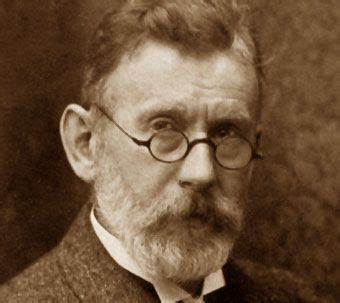
Bio: (1862-1922) Austrian legal scholar and sociologist. Eugen Ehrlich studied law at the University of Vienna, and later lectured at the same university and at the University of Czernowitz.
Eugen Ehrlich is widely considered one of the founders of the modern field of the sociology of law. He challenged the hierarchical concept of law advanced by theorists such as Hans Kelsen. Ehrlich argued that legal theories defining law solely as a collection of statutes and court rulings fail to capture the full legal reality of a society.
His approach to the sociology of law was partly influenced by the “free law” or “sense-of-justice” doctrine developed in Germany by Hermann Kantorowicz. Ehrlich identified two main and complementary sources of law. The first consists of legal history and jurisprudence—precedents and their written interpretations that guide legal reasoning. The second is what he called “living law,” meaning the norms and rules that emerge from everyday social practices and customs within a community.
Ehrlich presented these ideas most fully in his major work, Fundamental Principles of the Sociology of Law (1913). In this study, he examined legal systems across different countries and concluded that the development of law is driven less by legislation or legal scholarship than by broader social changes occurring within society itself.
Main works
Über Lücken im Rechte (1888).
Die stillschweigende Willenserklärung (1893);
Recht und Prätor. Alfred Hölder (1904);
Die Tatsachen des Gewohnheitsrechts (1907);
Fundamental Principles of the Sociology of Law (1913).